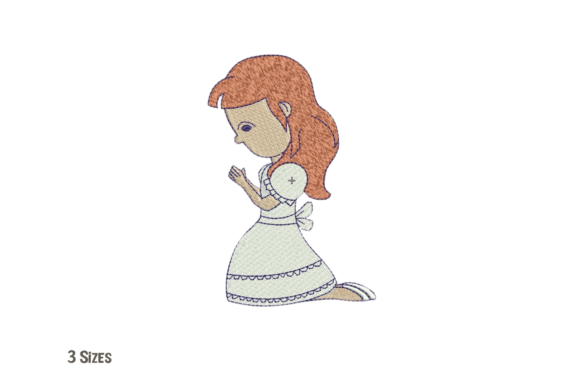
Review: Praying Girl Machine Embroidery Design
As a designer who has spent countless hours digitizing and stitching out files for clients, I approach every new machine embroidery design with a critical eye. It is not just about whether the image looks cute on a screen; it is about how those thousands of stitches will behave on actual fabric. Recently, I evaluated the Praying Girl Machine Embroidery Design, a piece rooted in the Religion category, to determine its viability for real-world embroidery projects. This review breaks down the practical application of this file for fellow crafters, Etsy sellers, and boutique owners.
First Impressions and Visual Mood
The first thing that strikes you about the Praying Girl Machine Embordery Design is its gentle demeanor. In a market saturated with loud, overly complex graphics, this design offers a quiet, heartwarming aesthetic. The layout is balanced, focusing on the silhouette and posture of the subject rather than excessive internal detailing. For a designer, this is promising. Overly dense details often lead to thread breaks or puckering, especially on smaller items.
The visual personality of this piece suggests innocence and peace. It naturally belongs to projects intended for children or sentimental gifts. When I visualize this stitched out, I do not see it on a rugged work jacket. Instead, I see it on soft textiles where the emotional weight of the image can resonate with the viewer. It creates a mood of serenity that elevates a simple textile item into a cherished keepsake.
Real-World Application Scenarios
To truly test a design, you must imagine it in a specific product context. I considered using this digital embroidery file for a custom order involving a baby’s christening blanket. The design’s scale seemed appropriate for the center of a receiving blanket, where it would serve as the focal point without overwhelming the soft fabric. Another strong candidate for this artwork is a personalized tote bag. A canvas tote with this motif stitched in subtle, earthy thread colors could appeal to customers looking for meaningful, everyday accessories.
For small shop products, consider sweatshirt embroidery. Placing this design on the left chest of a high-quality hoodie creates a boutique feel. It is understated yet recognizable. Similarly, for holiday gifts, this design works beautifully on pillow covers or kitchen towels. The theme transcends specific holidays, making it a versatile asset for year-round sales. As an Etsy seller, having a design that fits multiple niches—baby showers, religious milestones, or general comfort—increases its commercial value.
Technical Performance and Stitch Quality
When evaluating any embroidery file, stitch type distribution is crucial. While I cannot verify the exact stitch count without loading the file into my software, the visual complexity suggests a mix of fill stitch for larger areas and satin stitch for outlines or finer details. This combination is standard for achieving depth. However, designers must be wary of long satin stitches, which can snag easily. If the design relies heavily on them, careful handling during washing is required.
The provided formats—.DST, .HUS, .JEF, and .PES—cover most major home and semi-industrial machines. This versatility is a significant advantage for commercial embroidery professionals who may switch between different brands of equipment. However, always convert files using reliable software to ensure optimal pathing and trim commands. A poorly converted file can ruin even the best original digitizing.
Fabric and Hoop Considerations
Not every fabric is suitable for every design. For the Praying Girl Machine Embroidery Design, I recommend avoiding highly textured fabrics like heavy bouclé or loose-weave linens. The finer details may get lost or distort in the weave. Instead, opt for smooth cottons, poly-cotton blends, or stable knits. If you are stitching on stretchy fabric, such as a t-shirt, a cut-away stabilizer is non-negotiable to prevent distortion over time.
Hoop size is another critical factor. Ensure the design fits comfortably within your hoop with adequate margin for clamping. Do not push the design to the very edge of the hoop, as this increases the risk of hoop burns and misalignment. For curved surfaces like caps, use a cap frame and test the design on a similar curvature to check for pull compensation issues.
Commercial Viability and Brand Consistency
For craft business owners, consistency is key. This design aligns well with brands that focus on family, faith, and tradition. It enhances buyer engagement because it tells a story. Customers are not just buying a stitched shirt; they are buying a symbol of protection and love. This emotional connection drives higher perceived value, allowing for better pricing strategies.
When creating printable mockups or digital previews for your online store, ensure the thread colors match the final product closely. Misleading images lead to returns. Test the design in black and white to check contrast. If the design loses its definition without color, it may rely too much on hue differences rather than stitch structure. A robust design should hold its shape regardless of color choice.
Practical Designer Notes
Before committing to a full production run or selling finished items, follow these steps:
- Test on scrap fabric: Always stitch a sample on the same material and layer count as your final product. This reveals tension issues and registration errors.
- Check thread contrast: Ensure the background fabric color provides enough contrast for the design to be visible. Dark fabrics may require underlay adjustments or lighter thread choices.
- Verify licensing: Confirm the license terms for the digital embroidery file. Some creators allow unlimited sales of finished physical goods but restrict the resale of the digital file itself. Respect intellectual property rights.
- Inspect small details: Zoom in on the design in your software. Look for tiny jumps or unnecessary trims that can be optimized to reduce production time.
- Consider washability: If the item is for a child, ensure the stitches are secure and the fabric can withstand frequent washing without fraying around the embroidery edges.
Final Verdict
The Praying Girl Machine Embroidery Design is a solid addition to any designer’s library, particularly for those specializing in children’s wear, religious gifts, or sentimental home decor. Its strength lies in its emotional resonance and clean layout. While it requires careful attention to fabric choice and stabilization, the resulting finished product exudes professionalism and care. For handmade product creators looking to expand their design assets with meaningful imagery, this file offers a reliable and aesthetically pleasing option. Just remember to test thoroughly and respect the technical limits of your machine and materials.